Plant Pathology Scanner + ViTaL · 2023–2024 · Imaging hardware · Edge ML
Before the prediction, get the picture.
A leaf scanner and a vision-transformer pipeline: looking at plant disease from image capture through to classification.
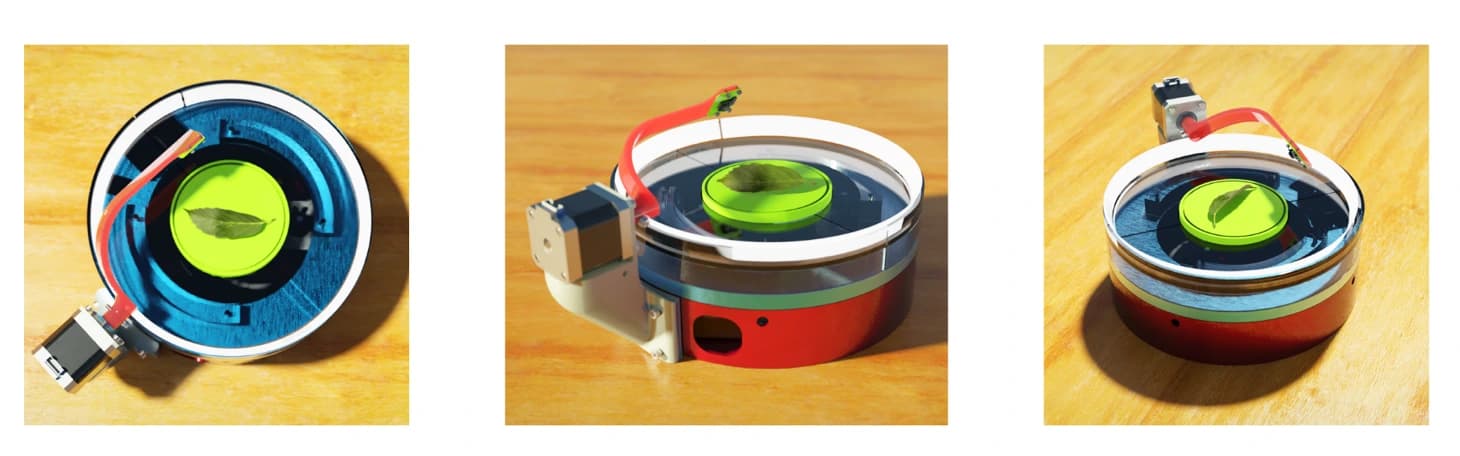 Figure 6 · proposed scanner design, 2024
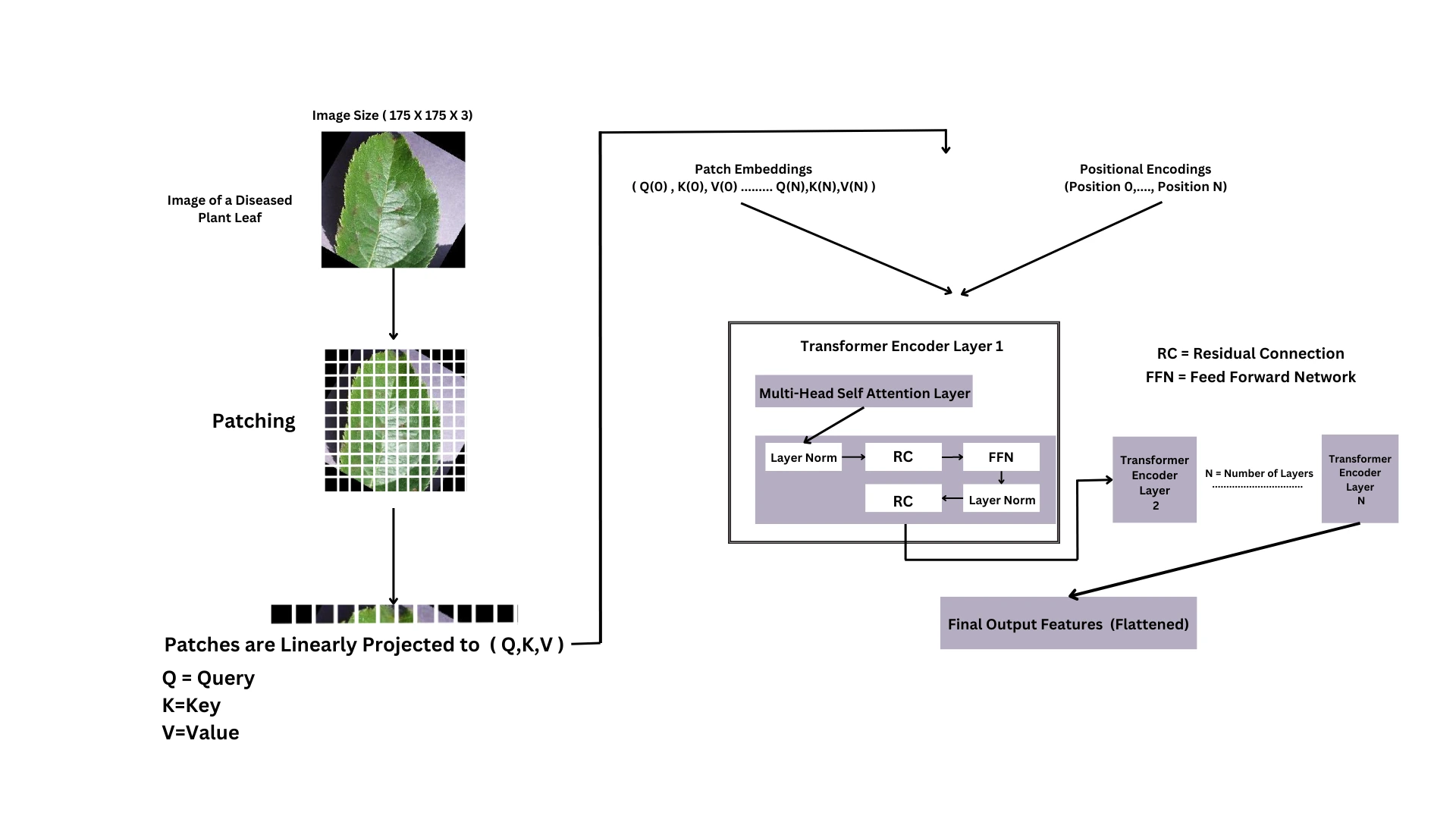
How does a model read a leaf?
Illustrated input
Patch values + where they belong
Extracted features → CNN classifier
Begin with the leaf.
A leaf image contains colour, texture, veins, and other visual patterns. This leaf is an original illustration, not a PlantVillage sample or a diagnosis.
Explore at your own pace.
Conceptual illustration inspired by Vision Transformer and the ViTaL paper. Patch count, colours, connections, and feature bars are simplified. No model runs here; no disease prediction is made.
Evidence from the paper
- Leaf images
- 3,306
The study’s PlantVillage subset, spanning six plant species.
- Best Hamming loss
- 0.054
Architecture 2 without linear projection; reported in Table 2.
- With projection
- 0.079
The same Architecture 2, with linear projection; reported in Table 4.
These are reported classification experiments on a PlantVillage subset, not field performance. The scanner is presented in the paper as a proposed hardware design.
Start at the leaf
The imaging system uses a rotating examination bed, a high-resolution camera, and anti-glare lighting to capture a leaf from multiple angles. A Raspberry Pi and custom PCB control the scan. The hardware is part of the problem: the model needs useful images to work with.
Then the model
We compared two CNN classifiers using Vision Transformer features: unchanged, linearly projected, and projected within transformer blocks. The most accurate configuration was Architecture 2 without projection, with a reported Hamming loss of 0.054. Reducing the feature representation did not automatically improve classification.
The trade-off is the finding
For Architecture 2, Hamming loss rose from 0.054 without projection to 0.079 with linear projection. Lower is better. Compact features were attractive for constrained hardware, but our comparison exposed a classification cost. That is the design decision: judge compression against the errors it introduces, rather than treating a smaller representation as an automatic win.
Two parts of one system
The research connects image acquisition with disease identification. The scanner has a granted design patent, 411009-001; the ViTaL paper documents the classification experiments and proposed hardware approach.