CS-ATR · 2024 · Robotics · Disaster response
When forward isn’t the only way through.
A capsule robot with perpendicular tracks, built to explore movement and balance on uneven terrain.
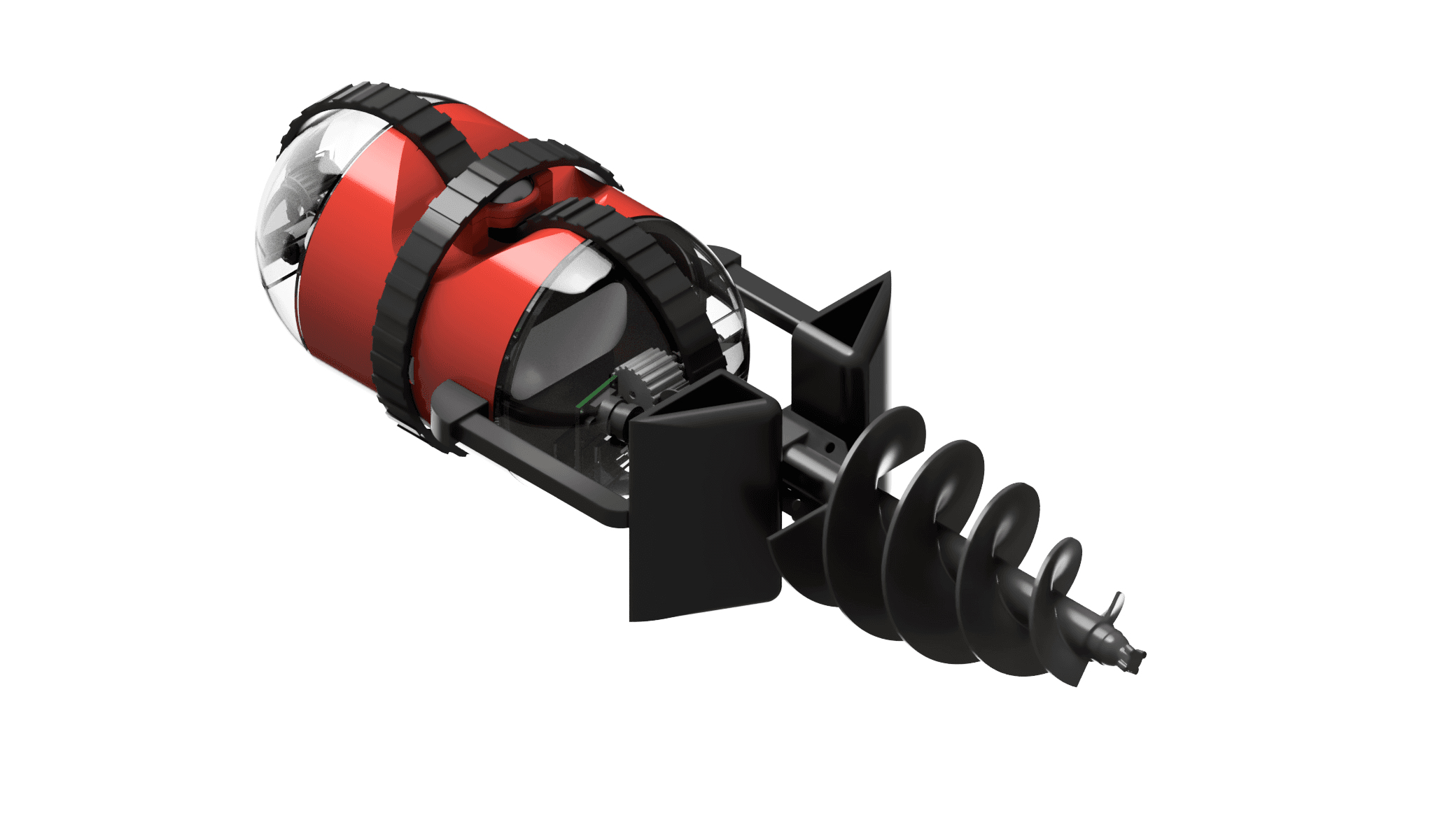 Capsule robot · design render
Sense the tilt. Change the motion.
The robot’s sensing and camera feed give the controller and operator information about its surroundings and orientation.
Control-loop illustration. This is not a live robot controller or a terrain simulation.
Evidence from the paper
- Track arrangement
- 90°
Perpendicular tracks separate longitudinal travel from lateral movement.
- Mobility test
- 35.06 s
Reported completion time on a prepared 10.28 m track, including lateral movement and a 5-inch pipe.
- Stone-pellet terrain
- 2–4 mm
The tested pellet-size transition exposed slippage and reduced traction.
Source: IEEE Access (2024), sections III and V. Results describe the paper’s prepared test environments. They do not establish deployment readiness in a real disaster site.
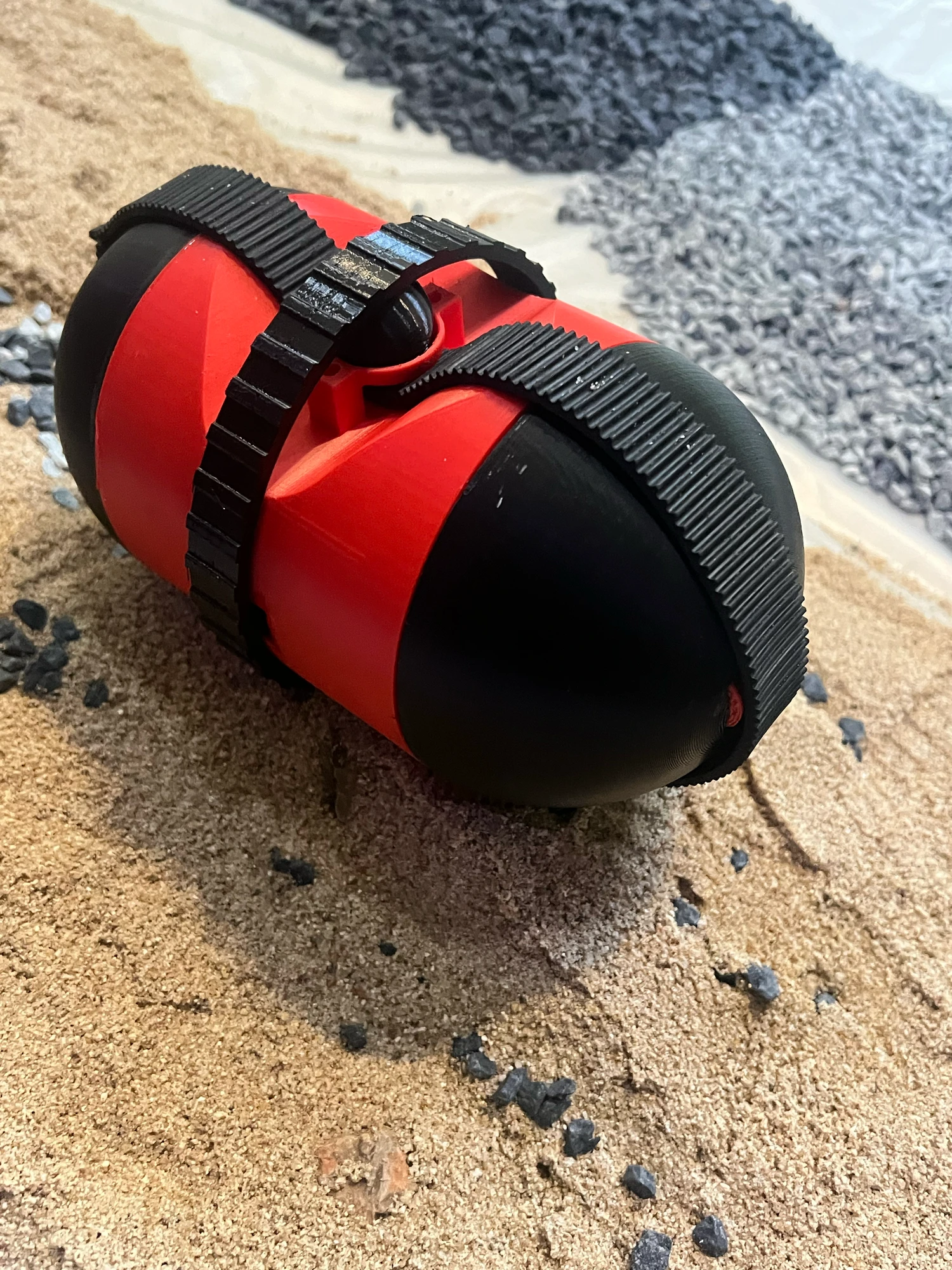
The terrain sets the problem
Rubble and confined spaces demand more than forward motion. Our capsule-shaped robot uses two tracks at right angles: one for travel along its length, the other for lateral movement and balance corrections.
Mechanics meet control
The study combines this track arrangement with PID tilt correction and a variational autoencoder for detecting unusual motion. I co-authored the work with Vinay Murali, R. Pragna, and A. Annis Fathima, connecting the mechanical design to its sensing and control system.
Off the screen, onto the ground
We evaluated the design in Simscape and tested a physical prototype on river sand, small stones, and simulated pits. Lower-traction surfaces exposed difficulties as well as capability. Those tests are the basis of the paper’s search-and-rescue proposal.